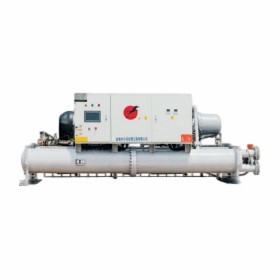
In a full-air system, the air supplied to each zone (or room) is centrally processed in the machine room. The equipment used to process the air is called an air handling unit, or air conditioning unit.
An air conditioning unit is a device used to regulate the temperature, humidity, and cleanliness of indoor air. It includes air heaters, air coolers, and air humidifiers to meet heat and humidity requirements; air filters to purify the air; mixing boxes to regulate fresh and return air; and silencers to reduce fan noise. Air handling units are all equipped with fans. Depending on the year-round air conditioning requirements, the unit can be configured with an automatic control system connected to a cold or heat source.
Compared to unitary air conditioning units, it has advantages such as larger air volume handling capacity and higher air quality, making it particularly suitable for large spaces and high-traffic systems such as shopping malls, exhibition halls, and airports.
A good air handling unit should have the characteristics of small footprint, multiple functions, low noise, low energy consumption, aesthetically pleasing design, and convenient installation and maintenance. However, due to its multiple functional sections and complex structure, to achieve a comprehensive balance, designers and construction units need to make extensive comparisons in terms of materials, manufacturing processes, structural characteristics, and selection calculations in order to obtain a more satisfactory result.