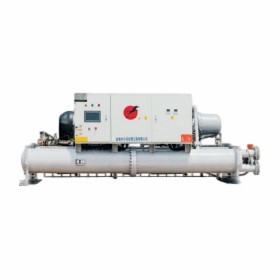
The heat exchanger can operate at various mass flow rates, and the pressure drop between the shell and tube sides can be approximately estimated using the pressure drop at the rated flow rate. A higher flow velocity of the medium within the heat exchanger results in a higher heat transfer coefficient, but also increases the pressure drop across the heat exchanger.
Using specially designed heat exchanger tube surface structures, such as finned tubes, studded tubes, or threaded tubes, can increase the heat transfer area and turbulence, thereby improving heat exchange efficiency. In typical design parameters, the tube-side flow velocity is controlled at 1.5-2.5 m/s, the shell-side flow velocity is 0.3-1.0 m/s, and the pressure drop does not exceed 70 kPa.