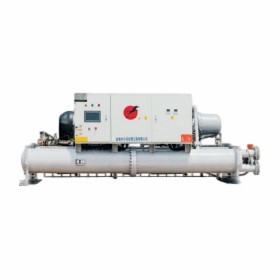
The entire process is mainly accomplished by four core components:
The compressor, like the "heart" of the air conditioner, compresses the heat-absorbing gaseous refrigerant into a high-temperature, high-pressure gas and pumps it to the outdoor unit.
The condenser, located in the outdoor unit, allows the high-temperature refrigerant gas to dissipate heat to the outdoor air, thus turning it back into a high-pressure liquid.
The throttling device (usually called a capillary tube or expansion valve) is responsible for suddenly "relaxing" the high-pressure liquid refrigerant, reducing its pressure and temperature to prepare for the next step of heat absorption.
The evaporator, located in the indoor unit, allows the low-temperature liquid refrigerant to absorb heat from the indoor air flowing through the fins. The cooled air is then blown back into the room by the fan, while the refrigerant, having absorbed heat, evaporates back into a gas and is drawn back into the compressor.