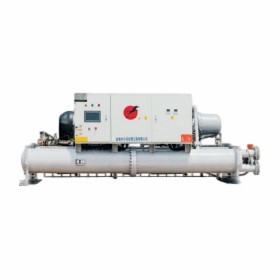

A solar heating system is an eco - friendly and cost - effective way to heat water or spaces. One crucial component in such a system is the heat exchanger. In this blog, we'll explore whether a copper tube fin heat exchanger can be used in a solar heating system, and as a supplier of Copper Tube Fin Heat Exchangers, I'll share some insights based on industry knowledge and experience.
The Basics of Solar Heating Systems
Solar heating systems work by capturing solar energy through solar collectors. These collectors absorb sunlight and convert it into heat, which is then transferred to a fluid (usually water or a water - glycol mixture). This heated fluid is then circulated to a storage tank or directly to the area that needs heating. The efficiency of this heat transfer process is key to the overall performance of the solar heating system.
Characteristics of Copper Tube Fin Heat Exchangers
Copper tube fin heat exchangers are known for their excellent heat transfer properties. Copper is a highly conductive metal, which means it can quickly transfer heat from one fluid to another. The fins on the tubes increase the surface area available for heat transfer, enhancing the overall efficiency of the heat exchanger.
- High Thermal Conductivity: Copper has a thermal conductivity of around 400 W/(m·K), which is significantly higher than many other metals. This allows for rapid heat transfer between the solar - heated fluid and the fluid that will be used for heating.
- Corrosion Resistance: Copper has good corrosion resistance, especially when used in water - based systems. This is important in solar heating systems, as the fluid circulating through the heat exchanger is often water or a water - glycol mixture.
- Versatility: Copper tube fin heat exchangers can be designed in various configurations to meet different requirements. They can be used in both small - scale residential solar heating systems and large - scale commercial applications.
Suitability for Solar Heating Systems
-
Heat Transfer Efficiency
In a solar heating system, the heat exchanger needs to efficiently transfer heat from the solar - heated fluid to the water or space that needs heating. The high thermal conductivity of copper and the increased surface area provided by the fins make copper tube fin heat exchangers well - suited for this task. They can quickly transfer the heat collected by the solar collectors to the storage tank or the heating system, ensuring that the energy is used effectively. -
Compatibility with Solar Fluids
The fluids used in solar heating systems, such as water and water - glycol mixtures, are generally compatible with copper. Copper does not react with these fluids under normal operating conditions, which means there is less risk of corrosion and system failure. This compatibility helps to ensure the long - term reliability of the solar heating system. -
System Design and Installation
Copper tube fin heat exchangers are relatively easy to integrate into solar heating systems. They can be designed to fit different system layouts and can be connected to the solar collectors, storage tanks, and other components with relative ease. This flexibility in design and installation makes them a popular choice for solar heating applications.
Comparison with Other Heat Exchangers
-
Stainless Steel Finned Tube Heat Exchangers
Stainless Steel Finned Tube Heat Exchangers are also commonly used in various heating systems. While stainless steel has good corrosion resistance, its thermal conductivity is much lower than that of copper. This means that a stainless steel finned tube heat exchanger may not transfer heat as efficiently as a copper tube fin heat exchanger in a solar heating system. However, stainless steel may be a better choice in environments where there is a high risk of corrosion from certain chemicals or in high - temperature applications. -
Plate Fin Type Heat Exchangers
Plate Fin Type Heat Exchangers offer a high surface - area - to - volume ratio, which can result in efficient heat transfer. However, they may be more complex and expensive to manufacture and install compared to copper tube fin heat exchangers. Additionally, plate fin heat exchangers may be more prone to fouling, which can reduce their efficiency over time. Copper tube fin heat exchangers are generally more robust and easier to maintain in solar heating systems.
Challenges and Considerations
- Cost
Copper is a relatively expensive material compared to some other metals. This can increase the initial cost of the copper tube fin heat exchanger. However, considering its long - term performance and energy - saving benefits, the investment may be worthwhile. - Scaling and Fouling
In solar heating systems, there is a risk of scaling and fouling in the heat exchanger. Scaling occurs when minerals in the water precipitate and form a layer on the heat transfer surfaces, reducing the efficiency of the heat exchanger. Regular maintenance and the use of water treatment methods can help to mitigate this issue.
Our Offer as a Copper Tube Fin Heat Exchanger Supplier
As a supplier of Copper Tube Fin Heat Exchangers, we understand the specific requirements of solar heating systems. Our heat exchangers are designed and manufactured to meet the highest standards of quality and performance. We offer a wide range of sizes and configurations to suit different solar heating applications, whether it's a small residential system or a large - scale commercial project.
Our team of experts can provide technical support and guidance to help you select the right heat exchanger for your solar heating system. We also offer after - sales service to ensure that your system operates smoothly and efficiently.
Conclusion
In conclusion, a copper tube fin heat exchanger can be an excellent choice for a solar heating system. Its high thermal conductivity, corrosion resistance, and ease of integration make it well - suited for this application. While there are some challenges such as cost and scaling, these can be managed with proper design, maintenance, and water treatment.
If you are considering a solar heating system and are in need of a reliable heat exchanger, we encourage you to contact us for more information. Our team is ready to discuss your specific requirements and provide you with a solution that meets your needs. We look forward to the opportunity to work with you on your solar heating project.


References
- Incropera, F. P., DeWitt, D. P., Bergman, T. L., & Lavine, A. S. (2007). Fundamentals of Heat and Mass Transfer. John Wiley & Sons.
- Duffie, J. A., & Beckman, W. A. (2013). Solar Engineering of Thermal Processes. John Wiley & Sons.