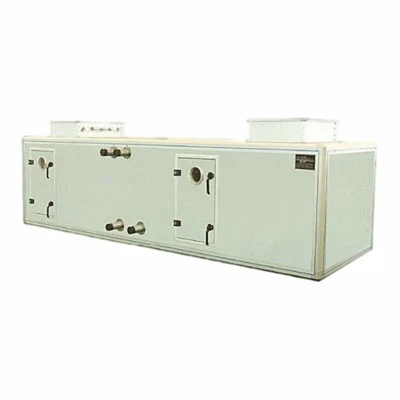

What is the role of the fin density in a plate fin type heat exchanger?
As a supplier of Plate Fin Type Heat Exchangers, I've witnessed firsthand the significance of various design parameters in optimizing heat transfer efficiency. One such critical factor is fin density, which plays a pivotal role in determining the performance of these heat exchangers.
Understanding Fin Density
Fin density refers to the number of fins per unit length or area in a plate fin type heat exchanger. It is typically measured in fins per inch (FPI) or fins per centimeter. A higher fin density means more fins are packed into a given space, while a lower fin density indicates fewer fins.
Impact on Heat Transfer
The primary role of fins in a heat exchanger is to increase the surface area available for heat transfer. By increasing the fin density, we can significantly enhance the heat transfer surface area, which in turn improves the overall heat transfer rate. This is because more fins provide more contact points between the fluid and the heat exchanger surface, allowing for greater heat exchange.
For example, consider a plate fin type heat exchanger with a low fin density. The fluid flowing through the heat exchanger has limited contact with the fins, resulting in a relatively low heat transfer rate. On the other hand, a heat exchanger with a high fin density provides more surface area for the fluid to interact with, leading to a higher heat transfer rate.
However, it's important to note that increasing the fin density beyond a certain point may not always result in a proportional increase in heat transfer. This is because as the fin density increases, the flow resistance of the fluid also increases, which can lead to a decrease in the flow rate. Additionally, a very high fin density may cause fouling and clogging, which can further reduce the heat transfer efficiency.
Effect on Pressure Drop
In addition to its impact on heat transfer, fin density also affects the pressure drop across the heat exchanger. As the fin density increases, the flow path of the fluid becomes more tortuous, resulting in a higher pressure drop. This is because the fluid has to navigate through a larger number of fins, which increases the resistance to flow.
A high pressure drop can have several negative consequences. It can increase the energy consumption of the system, as more power is required to pump the fluid through the heat exchanger. It can also reduce the flow rate of the fluid, which can affect the overall performance of the heat exchanger.
Therefore, when designing a plate fin type heat exchanger, it's important to strike a balance between fin density and pressure drop. A higher fin density may provide better heat transfer, but it also comes with a higher pressure drop. On the other hand, a lower fin density may result in a lower pressure drop, but it may also reduce the heat transfer efficiency.
Considerations for Different Applications
The optimal fin density for a plate fin type heat exchanger depends on several factors, including the type of fluid, the flow rate, the temperature difference, and the application requirements. For example, in applications where high heat transfer rates are required, such as in power plants and chemical processing industries, a higher fin density may be preferred. However, in applications where pressure drop is a critical factor, such as in air conditioning and refrigeration systems, a lower fin density may be more suitable.


In addition, the choice of fin material also plays a role in determining the optimal fin density. Different materials have different thermal conductivities, which can affect the heat transfer performance of the heat exchanger. For example, copper and aluminum are commonly used fin materials due to their high thermal conductivity. However, stainless steel fins may be preferred in applications where corrosion resistance is a concern.
Our Plate Fin Type Heat Exchangers
At our company, we offer a wide range of Plate Fin Type Heat Exchangers with different fin densities to meet the diverse needs of our customers. Our heat exchangers are designed and manufactured using the latest technology and high-quality materials to ensure optimal performance and reliability.
We also offer Copper Tube Fin Heat Exchangers and Stainless Steel Finned Tube Heat Exchangers for applications where specific material requirements are needed. Our team of experienced engineers can help you select the right heat exchanger for your application based on your specific needs and requirements.
Conclusion
In conclusion, fin density is a critical factor in determining the performance of a plate fin type heat exchanger. By increasing the fin density, we can enhance the heat transfer surface area and improve the overall heat transfer rate. However, it's important to balance the fin density with the pressure drop to ensure optimal performance. At our company, we offer a wide range of heat exchangers with different fin densities to meet the diverse needs of our customers. If you're interested in learning more about our products or have any questions, please don't hesitate to contact us for a consultation.
References
- Incropera, F. P., & DeWitt, D. P. (2002). Fundamentals of heat and mass transfer. John Wiley & Sons.
- Kays, W. M., & London, A. L. (1998). Compact heat exchangers. McGraw-Hill.
- Shah, R. K., & Sekulic, D. P. (2003). Fundamentals of heat exchanger design. John Wiley & Sons.