
Hey there! As a supplier of Smoke Exhaust Fire Dampers, I'm super excited to share with you all the different types of these crucial safety devices. Smoke Exhaust Fire Dampers play a vital role in preventing the spread of fire and smoke in buildings, and understanding the various types can help you make the right choice for your specific needs.
1. Gravity - Type Smoke Exhaust Fire Dampers
Gravity - type dampers are pretty straightforward. They work based on the principle of gravity. When there's a fire, the heat causes the fusible link to melt. Once the link melts, the damper blade drops down due to gravity, closing off the duct. This effectively stops the spread of smoke and fire through the ventilation system.
These dampers are simple in design and relatively easy to install. They're a cost - effective option for many applications. However, they do have some limitations. For example, they might not be as reliable in high - velocity airflows. If the airflow is too strong, it could prevent the damper blade from closing properly.
2. Motor - Operated Smoke Exhaust Fire Dampers
Motor - operated dampers are a bit more high - tech. They use an electric motor to control the opening and closing of the damper blade. When a fire is detected, a signal is sent to the motor, which then closes the damper.
One of the big advantages of motor - operated dampers is their precision. They can be programmed to close at a specific time or in response to certain conditions. This makes them a great choice for complex ventilation systems where precise control is needed. They're also more reliable in high - velocity airflows compared to gravity - type dampers.
But, like everything, they have their drawbacks. They're more expensive than gravity - type dampers, and they require a power source. If there's a power outage during a fire, the damper might not function as intended, unless there's a backup power system in place.
3. Fire Resistant Smoke Damper
The Fire Resistant Smoke Damper is designed to withstand high temperatures for a certain period of time. It not only stops the spread of smoke but also acts as a fire barrier. These dampers are made from special fire - resistant materials that can endure the intense heat of a fire.
They're commonly used in areas where fire safety is of the utmost importance, such as in commercial buildings, hospitals, and high - rise apartments. The fire - resistant properties of these dampers help to contain the fire and give people more time to evacuate the building safely.
4. Combined Smoke Damper
The Combined Smoke Damper is a multi - functional device. It combines the functions of a smoke damper and a fire damper. This means it can stop the spread of both smoke and fire in the ventilation system.
These dampers are very efficient because they eliminate the need for separate smoke and fire dampers. They're also more space - saving, which is a big plus in buildings where space is limited. They're often used in modern building designs where efficiency and functionality are key.


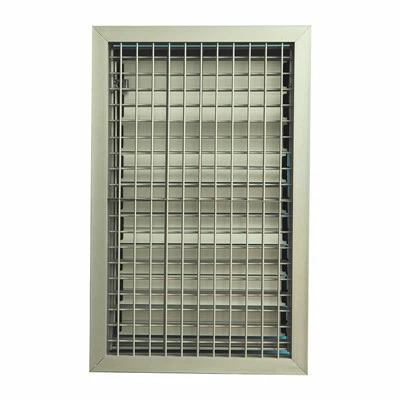
5. Grille Double Deflection
The Grille Double Deflection is a type of damper that is mainly used for air distribution. It has adjustable blades that can direct the airflow in two directions. This allows for better control of the air movement in a room.
While it's not strictly a fire - related damper like the others, it can still play a role in smoke exhaust systems. By controlling the airflow, it can help to ensure that smoke is effectively removed from the building. It's often used in conjunction with other types of smoke exhaust fire dampers to create a more efficient ventilation system.
Factors to Consider When Choosing a Smoke Exhaust Fire Damper
When you're in the market for a Smoke Exhaust Fire Damper, there are several factors you need to consider.
1. Building Requirements
Different buildings have different fire safety requirements. For example, a hospital might have stricter requirements than a small office building. You need to make sure the damper you choose meets the specific fire safety codes and regulations for your building.
2. Airflow Requirements
The airflow in your ventilation system is also an important factor. If the airflow is high, you might need a damper that can handle high - velocity air. Motor - operated dampers are usually a better choice in such cases.
3. Cost
Cost is always a consideration. You need to balance the cost of the damper with its performance and features. While more expensive dampers might offer better performance, you need to make sure it fits within your budget.
Why Choose Our Smoke Exhaust Fire Dampers
As a supplier, we take pride in offering high - quality Smoke Exhaust Fire Dampers. Our dampers are made from the best materials and are rigorously tested to ensure they meet the highest safety standards.
We have a wide range of dampers to choose from, so you can find the one that best suits your needs. Whether you need a gravity - type damper for a simple ventilation system or a motor - operated damper for a complex one, we've got you covered.
Our team of experts is always available to help you with any questions you might have. We can provide you with detailed information about the different types of dampers and help you make the right choice for your building.
Conclusion
In conclusion, there are several types of Smoke Exhaust Fire Dampers, each with its own unique features and benefits. Whether you're dealing with a small building or a large commercial complex, choosing the right damper is crucial for fire safety.
If you're interested in purchasing Smoke Exhaust Fire Dampers for your project, don't hesitate to get in touch. We're here to help you find the perfect solution for your needs. Let's work together to ensure the safety of your building and the people inside it.
References
- Building Fire Safety Codes and Standards
- Ventilation System Design Guidelines