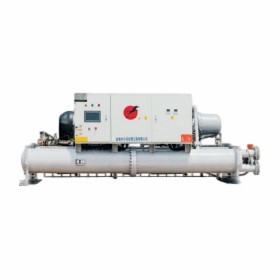
In the petroleum refining process, it serves as a crude oil preheater, heating the feedstock to the catalytic cracking reaction temperature. In the chemical production process, it is used as a reactor cooling jacket to precisely control the synthesis reaction temperature. Plate heat exchangers are commonly used in chemical plants due to their small size, high heat transfer efficiency, and easy assembly, making them suitable for various chemical unit operations. In power generation systems, they act as condensers, condensing turbine exhaust steam into circulating water.
In the food processing field, their plate structure design is used to achieve rapid heating and cooling in the heat exchange process. Heating, ventilation, and air conditioning systems complete the heat exchange between chilled water and cooling water through plate heat exchangers [1]. In the field of waste heat recovery technology, indirect heat exchangers are used to recover industrial waste heat and improve energy utilization efficiency, for example, through patented design to facilitate disassembly and maintenance.